Deep Forest Font Review: A Calm Script for Branding
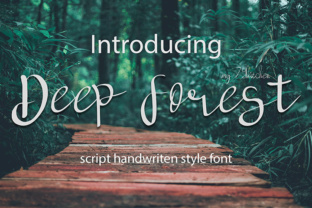
I was staring at a blank brand board last Tuesday, trying to find the right voice for a local skincare line that wanted to move away from sterile medical aesthetics toward something more organic and grounding. The client needed a signature element that felt personal but not messy, elegant but not stiff. That is when I pulled Deep Forest out of my library. As a calm, beautiful, handwritten font that is perfect for a wide range of projects, it immediately stood out against the grid. This handwritten font is great as a signature, which can add a unique feel in all of your designs, and within minutes of dropping it into the logo draft, the entire mood of the project shifted from generic to genuinely inviting.
Using Deep Forest for Organic Logo Design and Signatures
When working with Deep Forest, the first thing you notice is its rhythm. Unlike many Script Handwritten options that try too hard to be flashy with excessive swashes, this typeface maintains a steady, breathing pace. In the context of logo design, specifically for the skincare brand I was developing, the font acted as a perfect anchor. It mimics the flow of a real pen without the jagged edges that often plague digital scripts. For designers looking for reliable Fonts that convey trust and warmth, Deep Forest delivers a sophisticated hand-lettered look that feels authentic rather than manufactured. It works exceptionally well as a standalone logotype where the name of the business is short to medium length, allowing the letterforms to stretch and connect naturally.
Perfecting Packaging Labels with Calm Handwritten Typography
The real test for any display font is how it translates from a screen to a physical product mockup. I placed Deep Forest on a series of bottle labels and box fronts to see how it handled different scales. Because Deep Forest is a calm, beautiful, handwritten font that is perfect for a wide range of projects, it held up beautifully even when printed on textured kraft paper. The strokes have enough weight to remain legible on small packaging tags, yet they retain their delicate nature. This handwritten font is great as a signature, which can add a unique feel in all of your designs, especially when you need to highlight key ingredients or a "handmade" claim on a label. When pairing this with other Fonts, I found that a clean, geometric sans serif worked best for the informational text, creating a modern typography system that lets the script shine as the hero element.
Elevating Social Media Graphics and Web Headers with Deep Forest
In digital spaces, readability is often the casualty of style, but Deep Forest manages to balance both. While testing it for the client's Instagram story templates and website hero sections, I observed that the open counters and consistent x-height make it surprisingly readable even on mobile screens. As a Script Handwritten choice, it avoids the common pitfall of letters blending together into an illegible blob. If you are building a content strategy for a lifestyle blog, a boutique online shop, or a creative studio, Deep Forest serves as an excellent accent font for pull quotes and section dividers. It brings a human touch to digital interfaces that often feel cold. However, it is important to remember that like most creative fonts, it should be used sparingly in web design—stick to headlines and short phrases rather than body copy to maintain visual hierarchy and user experience.
Creating Cohesive Brand Identities for Boutiques and Cafés
Beyond logos and packaging, the versatility of Deep Forest shines when applied to a full brand identity system. I experimented with using it on business cards, thank-you notes, and storefront signage for a hypothetical café refresh. The font's personality suggests slowness and care, which aligns perfectly with businesses that want to emphasize quality over speed. Since Deep Forest is a calm, beautiful, handwritten font that is perfect for a wide range of projects, it adapts well to both monochrome printing and full-color applications. This handwritten font is great as a signature, which can add a unique feel in all of your designs, making it ideal for stamping onto napkins or embossing onto loyalty cards. When selecting Fonts for a comprehensive brand board, having a script that feels this natural reduces the need for custom lettering, saving time while still delivering a bespoke aesthetic.
Practical Limitations and Font Pairing Strategies for Deep Forest
No typeface is a one-size-fits-all solution, and honest reviews require discussing where a font might struggle. While Deep Forest excels in display roles, it is not suitable for long-form editorial design or dense paragraphs of text. The intricate connections between letters, which give it its charm, can become visually noisy if used at small sizes for body copy. Furthermore, if your project requires a highly formal, corporate, or industrial tone, this Script Handwritten style might feel too soft and approachable. It is best reserved for industries like wellness, hospitality, artisanal goods, and creative services. When pairing Deep Forest, avoid other decorative scripts; instead, opt for a sturdy serif or a neutral sans serif to ground the design. Always check the specific license included with the Fonts package to ensure it covers your intended commercial use, whether that involves merchandise, client logos, or digital templates.
Final Verdict on Deep Forest for Professional Design Projects
After spending a week integrating Deep Forest into various assets, from initial sketches to high-fidelity mockups, it has earned a permanent spot in my go-to collection. It captures that elusive "calm" aesthetic that so many brands are chasing right now without sacrificing professionalism. Whether you are a freelancer pitching a new identity or a small business owner DIY-ing your own branding, this typeface offers a level of polish that usually requires a custom illustrator. By choosing Deep Forest, you are selecting a tool that adds immediate character and warmth to your work. Just remember to test it in your specific environment, pair it with complementary Fonts, and respect its limitations regarding size and density. When used correctly, it transforms standard layouts into memorable brand experiences.